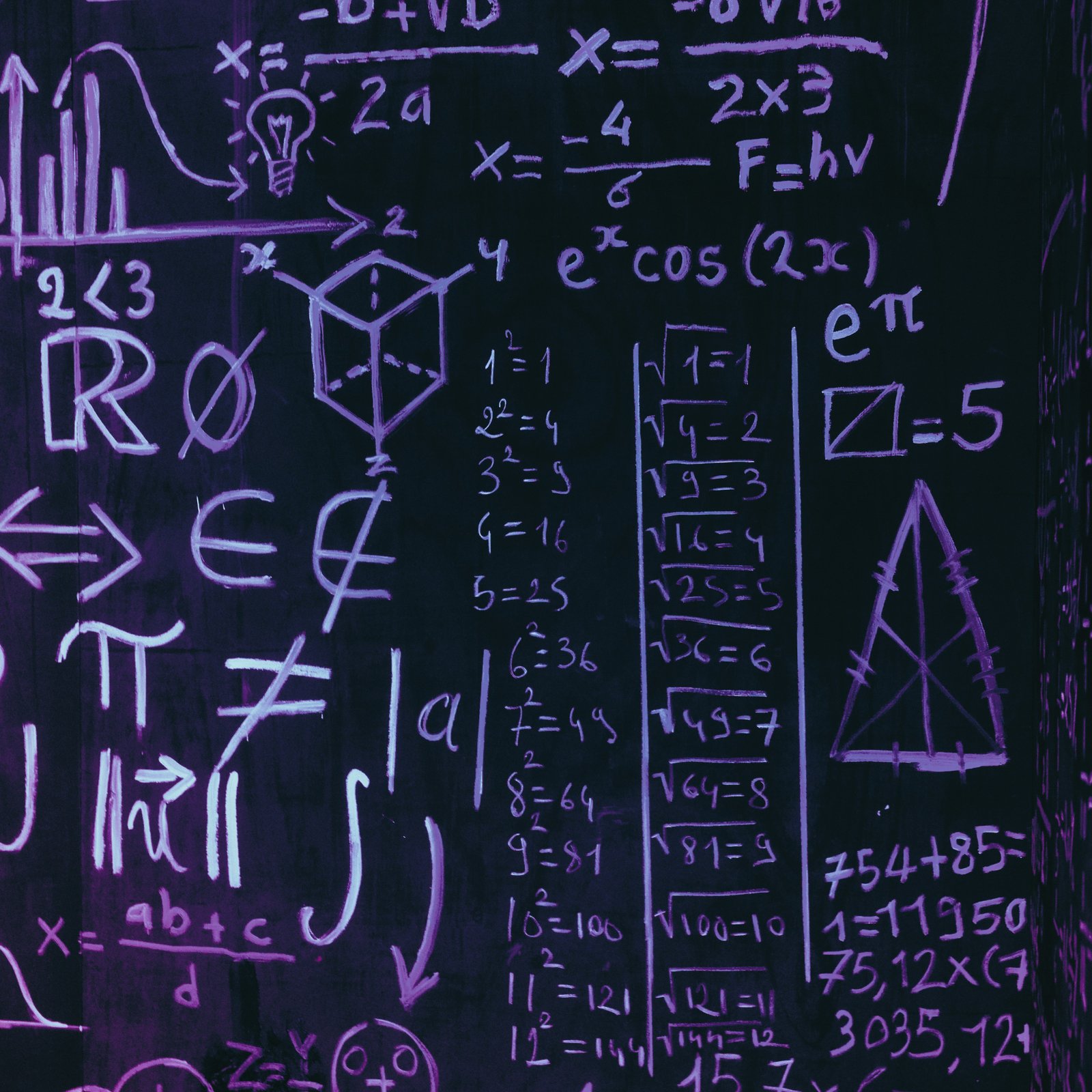
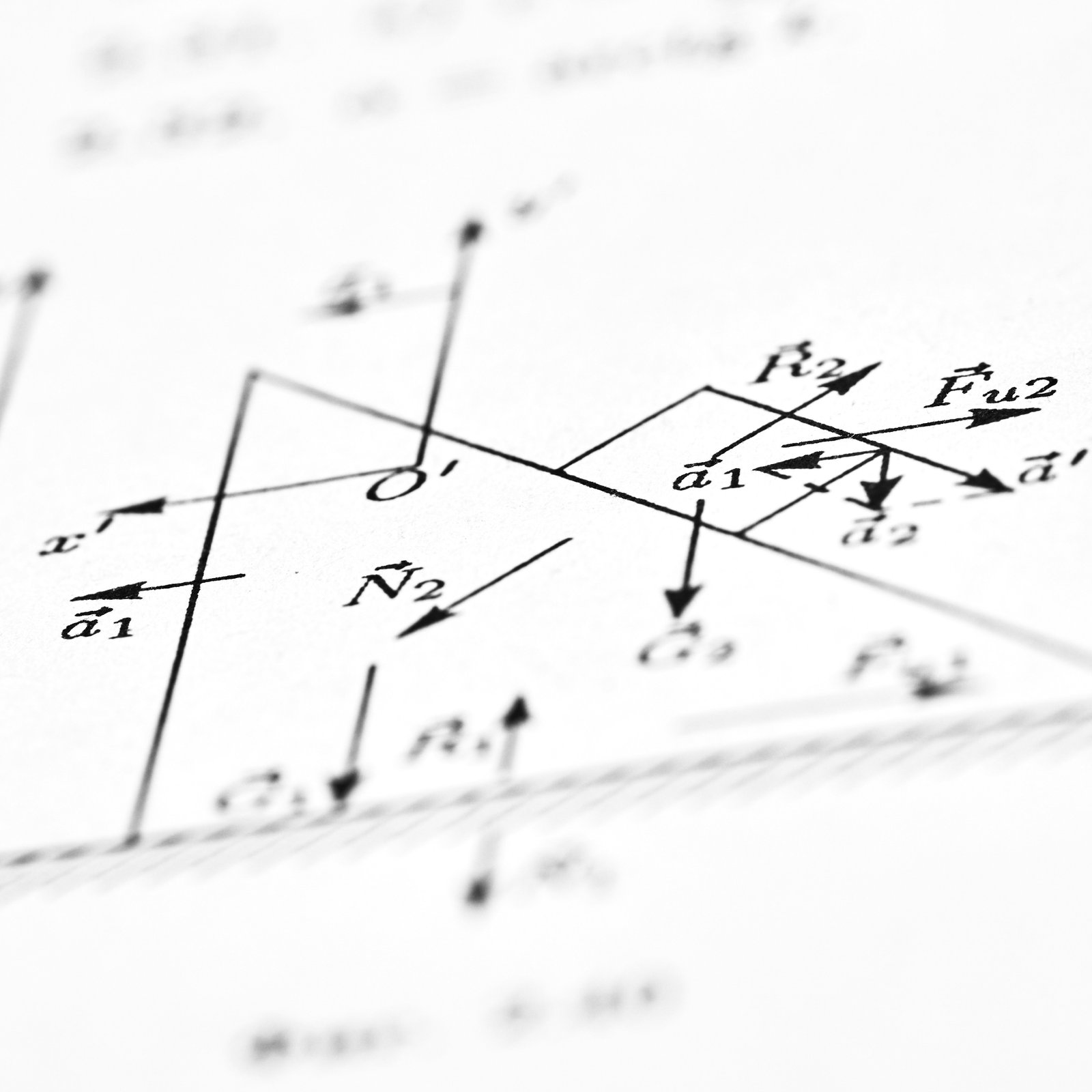
The Department of Mathematics is dedicated to providing a strong academic foundation in both pure and applied mathematics to support engineering, science, and technology disciplines. Established with the objective of imparting quality education, the department emphasizes the development of analytical, logical, and problem-solving skills among students.
The department plays a pivotal role in the academic framework of the institution by offering core and advanced courses in engineering mathematics, applied mathematics, and related areas. Faculty members are highly qualified and committed to excellence in teaching, research, and innovation. They actively engage in academic research, publications, and interdisciplinary collaborations with engineering, computer science, and applied sciences, contributing to knowledge advancement and societal development.
In addition to classroom teaching, the department organizes seminars, workshops, guest lectures, and research activities to enhance student learning and exposure.
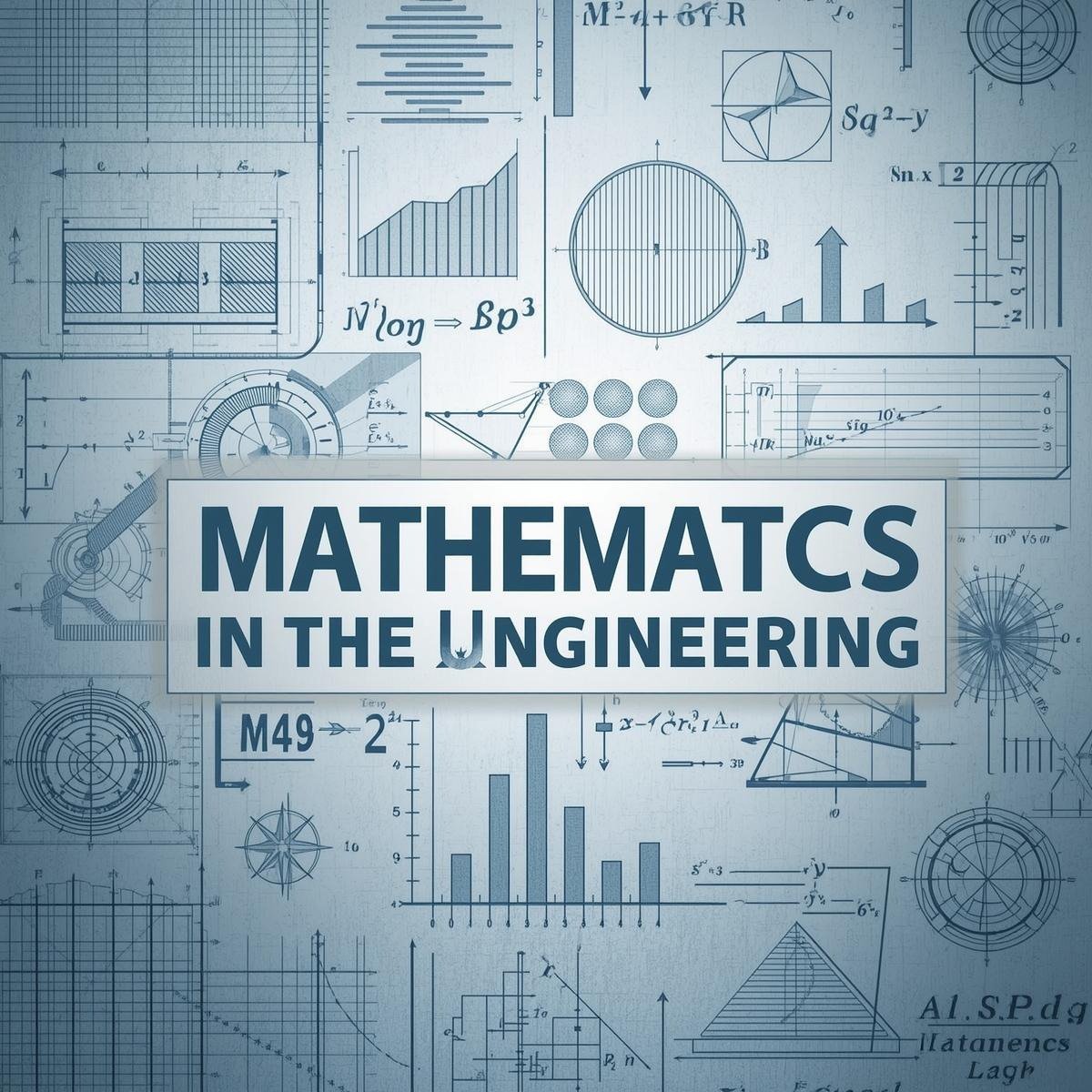
Mathematics is the foundational language of engineering. It provides the tools to model physical systems precisely. Calculus describes how quantities change and is essential for dynamics and fluid mechanics. Linear algebra enables the analysis of structures, networks, and systems of equations in many engineering problems. Differential equations are used to model time-dependent behavior in electrical circuits, heat transfer, and vibrations. Probability and statistics guide risk assessment, quality control, and experimental design. Numerical methods allow engineers to approximate solutions to complex problems that cannot be solved analytically. Optimization techniques help design efficient, cost-effective, and performance-maximizing solutions. Signal processing and Fourier analysis are central to communications, control, and imaging systems. Discrete mathematics and algorithms underpin computer engineering, cryptography, and software development. Mathematical modeling fosters innovation by turning physical intuition into testable predictions. Ultimately, mathematics makes engineering precise, predictable, and scalable, turning ideas into functioning technologies.
"
Studying mathematics is like learning the language of the universe—it teaches a student to see hidden structures, unravel complex problems, and think with elegance and precision
HOD
Dr. Kavya H. S. is an Associate Professor leading the Department of Mathematics with strong determination and commitment to the growth and well-being of the institution. She has 14 years of teaching experience and 8 years of research experience, contributing significantly to both academics and research. She has published six research paper in reputed journals, authored a book titled Discrete Mathematical structures and holds three patents.
She has published several research papers in reputed journals and conferences, and has also authored academic books, reflecting her dedication to knowledge dissemination. Her areas of interest include Fluid Mechanics, Applied Mathematics, Engineering Mathematics, Numerical Methods, etc.
As an academic leader, Dr. Kavya emphasizes quality education, innovation, and holistic student development. She actively engages in guiding students, promoting research culture, and fostering academic excellence in the department.
A career in mathematics offers both intellectual challenge and practical impact, making it ideal for individuals who enjoy abstract thinking and logical reasoning. Mathematicians and professionals with strong math backgrounds work in sectors such as :
| Mathematical Physicist Conducts theoretical research at the intersection of mathematics and physics to model natural laws. |
Actuarial Researcher Analyzes risk and uncertainty in insurance, pensions, and finance using probability theory and statistical analysis. |
| Academic Mathematician Engages in pure or applied mathematical research while teaching and mentoring at the university level. |
Data Scientist Uses mathematical models and statistical methods to analyze complex datasets and drive data-driven decisions. |
| Machine Learning Researcher Develops and refines algorithms that enable computers to learn from data, grounded in linear algebra, calculus, and statistics. |
Quantitative Analyst (Quant) Applies advanced mathematical techniques to model financial markets and optimize investment strategies. |
| Cryptographer Designs secure communication systems using number theory and abstract algebra to protect information. |
Operations Research Analyst Solves logistical and resource allocation problems using optimization, modelling, and simulation techniques. |
| Biostatistician Applies statistical methods to biological and medical research, supporting clinical trials and public health studies. |
Computational Scientist Uses numerical methods and algorithms to simulate scientific phenomena across physics, chemistry, and engineering. |
Using tools from algebraic topology to extract meaningful patterns and features from complex data.
Studying large networks like social media, biological systems, or the internet through graph theory and spectral methods.
Research in faster algorithms for large-scale optimization problems, including non-convex optimization relevant to AI.
Modelling disease spread, genetics, and ecological systems using differential equations and stochastic processes.
Research focuses on developing new algorithms, understanding model interpretability, optimization techniques, and large-scale data analysis.
Mathematical foundations for quantum algorithms, error correction, and quantum cryptography are hot research areas.
Investigations into the mathematical understanding of neural networks, generalization, and optimization landscapes.